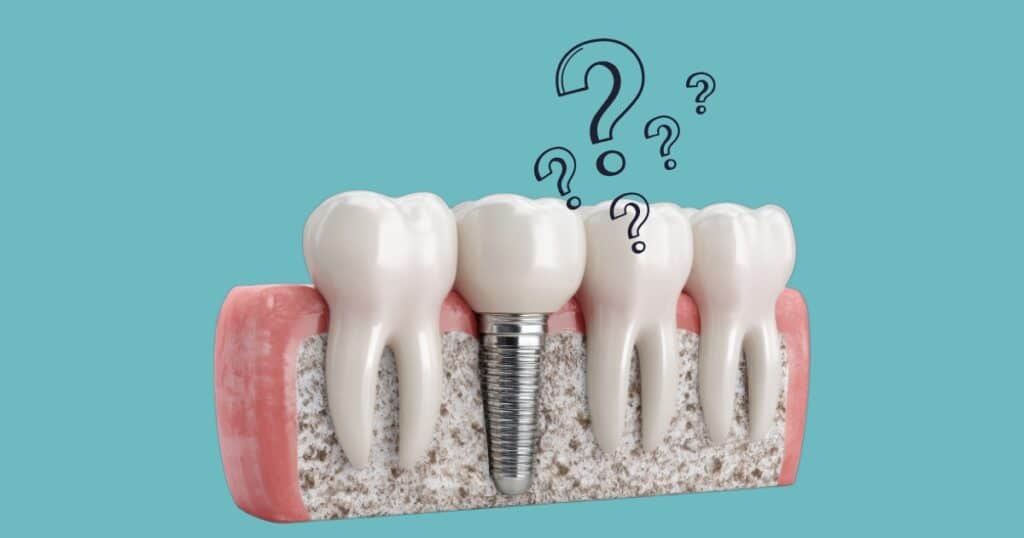
 Your dentist just told you that you need an implant. Or maybe your child’s dentist shared an X-ray showing that some permanent teeth never formed. Either way, the word ‘implant’ probably brought up a lot of questions — and maybe real concern about surgery, cost, and recovery time.
Here is something many families and adults in San Diego never hear about: there is often another path. Orthodontic space closure uses braces to slowly move teeth together and fill a gap — no surgery, no artificial tooth. It is a real dental implant alternative that works well for the right patient.
Dr. Marshall at Marshall Orthodontics helps patients work through exactly this kind of decision every day. Dr. Marshall excels in providing personalized treatment options to her patients and offer treatment options that include advanced techniques necessary for obtaining excellent results in orthodontic space closure. Most orthodontists do not offer treatment options that include such advanced techniques. Below, you will find a clear breakdown of who qualifies, how the process works, what it costs, and when an implant might still be the better call.
What Is Orthodontic Space Closure?
Space closure is exactly what the name says. Braces are used to slowly shift teeth together to fill an empty spot in the mouth. Over time, the surrounding teeth move into the gap — closing it completely.
This is very different from getting a dental implant. An implant involves placing a metal post into the jawbone to hold an artificial tooth. Instead of adding a fake tooth, it uses the teeth you already have to fill the space.
Most of the competing information you will find online about implant alternatives talks about dentures or bridges. Those are real options — but they are not the right fit for everyone. Orthodontic space closure is a third option that rarely comes up, even though it has been studied and practiced for decades with excellent long-term results.
Space closure is not for every patient. Which tooth is missing, how long the gap has been open, the patient’s age, and the health of the surrounding bone all play a big role in whether it will work. Dr. Marshall looks carefully at all of these factors before making any recommendation.
Who Is a Good Candidate?
Three groups of patients tend to ask about space closure as an implant alternative.
Kids or Teens Born Without Certain Permanent Teeth
Some children are born without all of their permanent teeth. This is called being congenitally missing teeth. It happens more often than most people expect. The most common teeth that may never form include the upper lateral incisors — the small teeth on either side of the two front teeth — and certain premolars further back in the mouth.
If your child has been told they are missing a permanent tooth, you may have heard that they will need an implant when they are older. That is one option. But for many kids and teens, orthodontic space closure is a stronger choice.
Here is why timing matters so much: while the jaw and teeth are still growing, there is an ideal window to move things into the right position. With space closure, treatment can be completed in the teen years.
If your child was told that they’ll need an implant, usually the implant cannot be done until your child is an adult. So your child may finish with braces at 14 years old, and now your child has to wear the retainers very well for many years to maintain the space for the future dental implant. Even if your child wears the retainers very well, the teeth could still drift and your child may still require another round of orthodontic treatment right before implant is placed as an adult. And unlike an implant, which is anchored to bone while surrounding teeth continue to grow, teeth moved with braces grow with the rest of the face over time.
A 2023 study found that the total cost of orthodontic pre-treatment plus an implant was meaningfully higher than the cost of space closure when looked at over a 12-year period. For families thinking long-term, that matters.
Dr. Marshall will look at your child’s X-rays and stage of growth to figure out the best time to begin orthodontic treatment for space closure.
Adults Who Had a Tooth Pulled and Are Being Advised to Get an Implant
If you had a tooth removed recently and your dentist is now recommending an implant to fill the space, it is worth getting an orthodontic opinion before committing to anything.
Space closure may be possible — and for some adults, it is the better path. Rather than going through oral surgery and paying for an implant, braces can close the gap using your own real teeth.
This works best when the tooth was removed in the last year or two. The teeth on either side of the space have not had much time to shift, which makes it easier to close things cleanly. The sooner you act, the more options you have.
Adults Facing a Tooth That May Not Last
Sometimes a dentist will offer a root canal as a way to try to save a problem tooth. Root canals can work well — but in some cases, the dentist may be honest with you that even with treatment, the tooth may not last a lifetime. You might be looking at an extraction down the road anyway.
If that sounds like your situation, thinking ahead is worth your time. Planning for space closure while the tooth is still in place — or immediately after it is removed — gives you far better options than waiting years to act. Getting an orthodontic opinion before a decision is made helps you choose the smartest path forward from the start.
What About Gaps That Have Been There for a Long Time?
This is one of the most common questions Dr. Marshall gets — and the answer requires honesty.
If a tooth has been missing for many years, orthodontic space closure may no longer be a realistic option.
Here is what happens over time: when a tooth is gone, the bone in that area begins to shrink. The teeth on either side slowly tip and drift into the space. By the time someone decides they want to close the gap, the surrounding teeth may have moved so much that closing the space would create a new problem with the bite. There may also not be enough healthy bone left to support the movement.
In those cases, an implant really may be the better answer — and Dr. Marshall will tell you that directly. The goal is always to find the right solution, not just the most convenient one.
If there is any chance you may want space closure in the future, the best thing you can do is act early — before bone loss and tooth shifting take options off the table.
What Are TADs and Why Are They Needed for Space Closure?
Most space closure cases require a small tool called a TAD — a temporary anchorage device. You can read more about how TADs work at the American Association of Oral and Maxillofacial Surgeons’ TAD resource page. TADs are like mini-implants, but only used during orthodontic treatment only. TADs may be placed by the orthodontist or may be referred to be placed by an oral surgeon or a periodontist.
A TAD is a very small titanium screw placed into the jawbone to act as a fixed anchor point during treatment. It sounds intimidating — but the placement is fast, done with local numbing, and most patients say it is far less uncomfortable than they expected. Once it has done its job, it is removed.
Without TADs, closing a space is like trying to pull a rope when there is nothing to pull against. The teeth on the opposite side of the mouth tend to drift in the wrong direction. TADs holds certain teeth steady, so the teeth that need to move actually do.
Space closure without TADs is possible in only a very small number of simple cases, but for most patients, TADs make treatment far more predictable and successful.
Because TADs add complexity to treatment, space closure cases do cost more than standard orthodontic treatment. The extra planning, placement, and monitoring all factor into the total fee. Dr. Marshall’s team will walk you through a clear cost estimate at your consultation.
How Does Space Closure Compare to the Alternatives?
When a patient comes in asking about implant alternatives, the conversation usually covers a few different options. Here is a straightforward look at how they compare.
Orthodontic Space Closure with Braces & TADs
- Uses your own natural teeth — no artificial tooth needed
- Bone and gum tissue stay healthy because the tooth moves with its own surrounding tissue
- Works particularly well for teens and young adults since teeth grow with the face over time
- Usually requires TADs, which adds to treatment cost and complexity
- Takes 2 to 3 years depending on the case
- Not always feasible if the gap has been open for many years
- No need to worry about maintenance of a dental implant or dental bridge over your lifetime
Dental Implant
- An artificial tooth root is surgically placed into the jawbone
- Works well for adults whose jaw is fully grown
- Cannot be placed in growing patients — teens must wait, often using temporary solutions in the meantime
- An implant anchored in bone does not grow with the face, which can cause it to appear to ‘sink’ as surrounding teeth continue to erupt
- Higher total cost (than orthodontic space closure with braces & TADs) when surgery, crown, and maintenance are added up
Dental Bridge
- A false tooth is held in place by crowns on the neighboring teeth
- The adjacent teeth must be shaved down a lot to fit the crowns — even if those teeth are healthy
- A fixed, non-removable option
- Less expensive than an implant upfront, but crowns eventually need replacement
Partial Denture
- A removable appliance that fills in one or more missing teeth
- Generally the most affordable option
- Not a fixed solution — must be removed at night and for cleaning
- May not feel as stable as other options
None of these is the right answer for every patient. The best choice depends on your age, which tooth is missing, how long it has been gone, your bite, your bone health, and your goals. Dr. Marshall will help you sort through all of it.
Will the Result Look Natural?
This is usually one of the first things patients want to know and it is a fair question.
If the gap being closed is for a missing back tooth, it will be very hard for a normal person to be able to tell any difference.
If the gap being closed is for a missing upper lateral incisor, it’s going to depend on the size and shape of each individual upper front tooth. When space closure is done with teeth that are the best shape and size, the results can be very hard to tell apart from a natural smile. The research backs this up. Studies show that with proper orthodontic treatment combined with some cosmetic reshaping by a dentist, the outcome can look very natural and nearly identical to a full natural set of teeth. If the teeth are not the best shape and size, it could require more cosmetic dental work by a dentist to make the smile as natural looking as possible.
Here is how that works in practice: when a canine tooth (the pointed tooth beside the lateral incisor) is moved into the space left by a missing lateral incisor, it may be gently filed down and also reshaped using tooth-colored bonding material (like white filling material). This smooths the tip and adjusts the shape, so it blends in naturally. In some cases, the adjacent teeth may also be lightly touched up.
Patients with healthy gum tissue and good bone tend to have the best cosmetic results. Dr. Marshall works closely with your dentist in San Diego to make sure the finish looks great.
Braces or Clear Aligners for Space Closure?
Dr. Marshall recommends braces for space closure at Marshall Orthodontics.
Clear aligners can work well for patients that only need minor tooth movements, so they are usually not great for space closure.
Traditional braces work very well for large tooth movements, so they are perfect for space closure cases. Besides the traditional silver metal braces, Dr Marshall offers more esthetically pleasing braces options, including champagne colored metal braces and ceramic braces.
Dr. Marshall will review your records and give you her honest recommendation based on what she sees — not on what is easiest or most convenient.
Why Early Action Makes a Big Difference
One of the most common mistakes patients make is waiting. The longer a gap sits open, the fewer options remain. Bone loss happens quietly. Teeth drift. The window for space closure gets smaller over time.
If your child’s dentist has mentioned that a permanent tooth is missing on an X-ray — even if your child is still young — that is the right time to schedule an orthodontic consultation. The sooner Dr. Marshall can assess the situation, the more options she has available for your child.
For adults, the same applies. If you just had a tooth pulled, or if you are still weighing what to do about a tooth that might need to come out — do not wait. An orthodontic consultation takes very little time and gives you a much clearer picture of what is possible.
There is no obligation to start treatment. The first visit is just information.
What to Expect at Your First Visit
Your first visit with Dr. Marshall at Marshall Orthodontics is relaxed and pressure-free. Here is what typically happens:
- X-rays &/or intraoral scan may be taken so Dr. Marshall can see your teeth, roots, and bone clearly
- Marshall talks with you about what she sees and what treatment options there are
- You have time to ask questions about cost, timing, and what treatment would look like
- If you would like to get treated by Dr. Marshall, the next visit is an orthodontic records appointment. Dr. Marshall will finalize your treatment options, after she does a detailed review of your orthodontic records.
There is no commitment required at the first visit. Dr. Marshall’s goal is to give you the full picture so you can make the best decision for yourself or your child.
Frequently Asked Questions
Can orthodontic space closure really replace an implant?
For the right patient, yes. Space closure is an evidence-based implant alternative that has been practiced successfully for decades. Whether it is the right fit depends on which tooth is missing, your age, bone health, your bite and how long the space has been open. Dr. Marshall will give you a straight answer at your first visit (sometimes, need a full orthodontic records review to be able to tell).
My child is missing a permanent tooth. When should we come in?
As soon as you find out. If your child’s dentist mentioned a missing tooth on an X-ray, schedule an orthodontic consultation now — even if your child is young. Acting at the right growth stage opens up more options and can lead to a better result. Waiting can close off the space closure path entirely.
Will space closure hurt more than regular braces?
Not significantly. There may be a little soreness after a TAD is placed, but most patients say it passes quickly. Day-to-day, wearing braces or aligners for space closure feels very similar to standard orthodontic treatment.
How long does space closure take?
Most cases take between 2 to 3 years. The size of the space, how far teeth need to move, patient age (adult males in particular can take a long time), bone density and what else needs to be corrected in the bite all affect treatment time. Dr. Marshall will give you a more specific estimate after reviewing your records, but they are always only estimates. Ultimately, we don’t know how quickly the teeth will move in any individual person.
Does the space stay closed after treatment?
Yes, as long as you wear your retainer. After any orthodontic treatment, including space closure, a retainer keeps teeth in their new positions. Without it, teeth can shift back over time. This is true for all orthodontic patients, not just those who had space closure.
Is space closure covered by dental or orthodontic insurance?
It depends on your plan. Some dental insurance plans cover a portion of orthodontic treatment regardless of the reason. Our team at Marshall Orthodontics will check your benefits and walk you through your out-of-pocket costs. Flexible payment plans are also available. TADs are usually not an insurance covered benefit.
The tooth was pulled several years ago. Is it too late?
It may be — but the only way to know for sure is to come in. Dr. Marshall will look at your bone levels, the position of surrounding teeth, and your bite before giving you an honest answer. Some older extractions can still be closed. Others cannot. You deserve a real answer based on your actual situation.
What if my child later wants an implant instead?
It may be technically possible, but that would mean you’ll need to have that space re-opened with another round of orthodontic treatment. Re-opening a space that was closed will usually also require TADs. It would be best to have both the parent and child on board, instead of just the parent, for whatever treatment option is chosen for the child. Dr. Marshall can talk through long-term considerations with you during your consultation.
How is space closure different from a bridge?
With a bridge, a false tooth is held in place by crowns placed on the healthy teeth on either side — which have to be shaved down even if they have no problems. Space closure moves your real teeth together so no healthy tooth structure is touched. For many patients, that is a meaningful difference.
Ready to Find Out If Space Closure Is Right for You?
You do not have to agree to an implant just because that was the first thing recommended. Orthodontic space closure is a proven implant alternative for many patients — kids with congenitally missing teeth, adults who just had a tooth pulled, and adults thinking ahead about a tooth that may not last.
The right answer looks different for every person. The best way to find out which path makes the most sense for you or your child is to sit down with Dr. Marshall and talk through it.
Marshall Orthodontics is right here in east county of San Diego and Dr. Marshall would love to help you get clear on your options.
Call us at (619) 670-4018 to schedule your consultation, or request an appointment online. The first step is just a conversation — and it could save you time, money, and a surgery you may not need.